The experience starts before guests arrive
A corporate event is a small project with a deadline that cannot move. How to plan offsites, launches and client dinners so the host can focus on guests, not logistics.
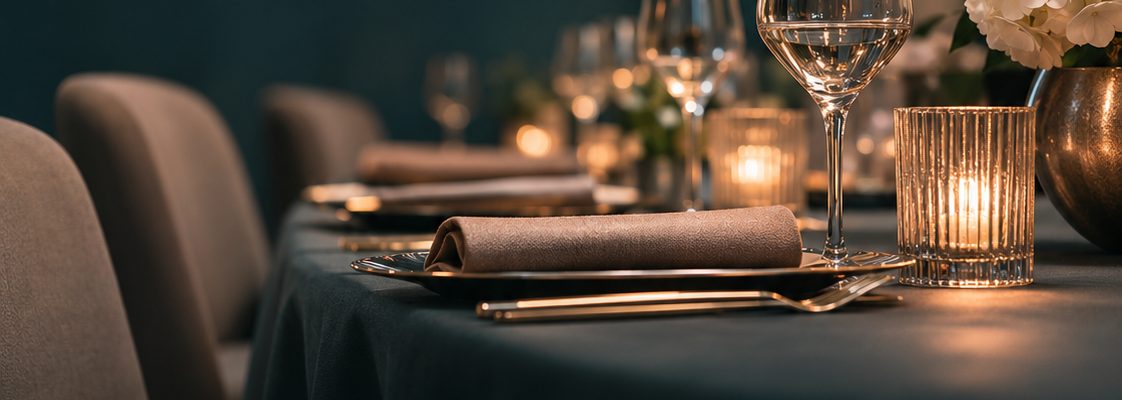
The guests will remember the evening. They will not see the forty decisions that made it work.
A leadership offsite, a product launch or a client dinner is a small project with a hard deadline that cannot move. The date is fixed, the guest list is public and every mistake happens in front of the people you most want to impress. Yet in many companies, events are organised the way they were five years ago: an assistant, a venue contact and a WhatsApp group, plus a senior person who gets pulled in at the last minute.
The result is predictable. Costs creep, details slip and the host spends the evening managing logistics instead of the guests.
Start with the brief, not the venue
Most events start with "find a nice place". The better question comes first: what should guests think, feel or do when they leave? A client dinner meant to deepen two relationships needs a quiet room and a seating plan. A launch meant to generate coverage needs space for press and a clear moment for the announcement. Write the purpose, the audience, the budget and the decision-maker on one page before a single venue is called.
Work back from the date
Every event has a timeline, whether anyone writes it down or not. Build it backwards from the day:
- Six to eight weeks out: brief approved, budget agreed, venue and date confirmed.
- Four weeks out: invitations sent, suppliers booked, agenda drafted.
- Two weeks out: guest list confirmed, speakers briefed, materials in production.
- The final week: run-of-show written, final numbers to the venue, every supplier reconfirmed.
Each milestone gets an owner and a date, exactly like any other project.
Write the run-of-show
The run-of-show is a minute-by-minute script of the day: when suppliers arrive, when doors open, who speaks when, when food is served, who handles the microphone, who greets the VIP guests. It is the single most useful document in event planning, and the one most often skipped.
If something is not on the run-of-show, assume nobody is doing it.
One coordinator, one list
Events involve many suppliers: venue, catering, audio-visual, printing, photography, transport, gifts. Each one needs a contact, a confirmed booking, an arrival time and a payment status. Keep them in one tracker with one coordinator who has authority to make decisions on the day. When everything routes through one person, problems are solved in minutes instead of escalated to the host.
Details guests notice
- Name cards spelled correctly, with the right titles.
- Dietary needs asked for in advance and passed to the kitchen.
- Parking, directions and a named contact sent the day before.
- A follow-up message to guests within 48 hours.
None of these are expensive. All of them depend on someone owning them.
Where Camilty fits
We plan and run corporate events from the brief to the last guest leaving: timelines, suppliers, guest lists, the run-of-show and on-the-day coordination. Your team gets to host instead of organise. Let's discuss your next corporate event.
Written by The Camilty team